VO Tech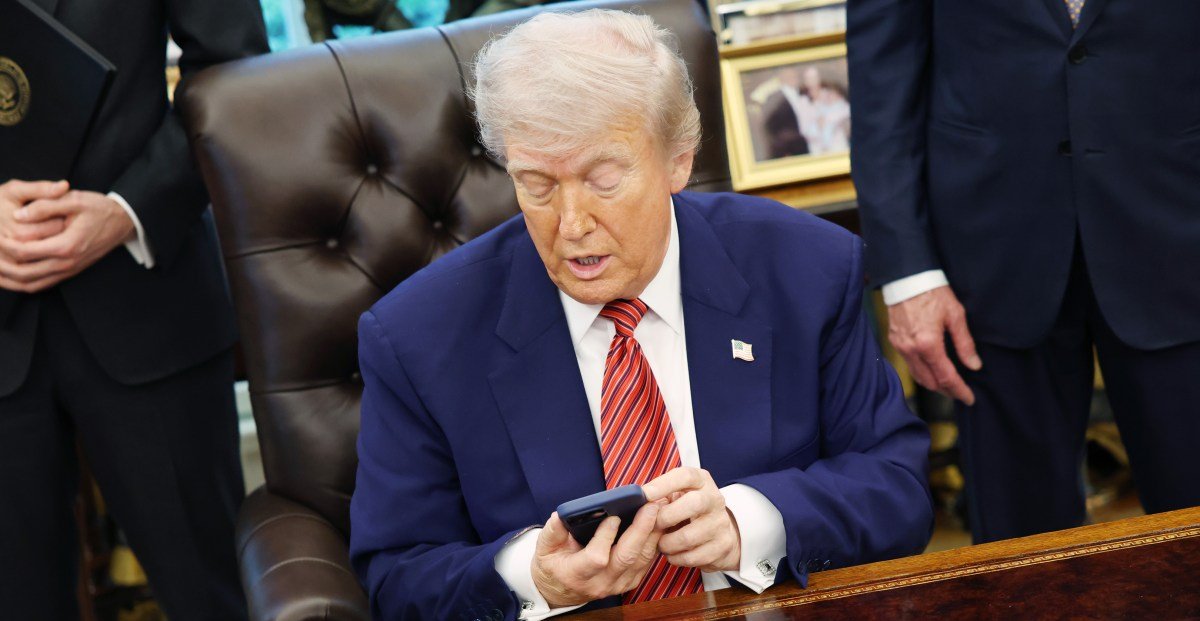
With a new wireless brand from the hosts of SmartLess emerging last week, and the debut of Trump Mobile this week, it sure seems like there’s a hot new trend in Celebrities Selling Things: phone service. How did it come to this? Why can’t they just stick to tequila? I talked to a couple of experts about the situation, and it’s not entirely the Deadpool actor’s fault. But also: it is kind of his fault.
To be clear, none of these celebrities / political figures are building new cell networks from scratch. What they’re launching are Mobile Virtual Network Operators, or MVNOs. These are companies that buy wireless service from the three big US carriers and re-sell it. It’s a business model that has existed for decades, Techsponential analyst Avi Greengart tells me. “They address market segments that carriers can’t or don’t want to address with their main brands,” he says. Older customers, people whose first language isn’t English, people with bad credit — they’re all prime targets for MVNOs.
It’s an attractive arrangement for the big carriers since they may have extra network capacity that would otherwise go unused. “They get a guaranteed return on their network investment,” Greengart says. “If you’re T-Mobile for example, you might have spare capacity on the network that you’ve built. So it makes sense to basically rent some of it out.”
“Mint Mobile proved that you could build the business if you could generate your own audience.”
MVNOs may be decades old, but I can’t shake the feeling that I’ve been hearing about them a lot more recently. Gerrit Schneemann at Counterpoint Research says that 5G may be partially behind that. The additional capacity that 5G allows compared to LTE is helping more MVNOs get off the ground. “Having 5G networks available, you have the capacity to actually run these [MVNOs] and to some extent, may not be as capacity constrained in some places,” Schneemann says.
On top of that, MVNOs are more attractive to customers than ever. The rise of eSIM technology has also helped reduce the friction in signing up for an MVNO, Schneemann says. Also, since we’re handling more and more of the services we use every day strictly online, people are also probably more willing to sign up for an MVNO than they were five or six years ago.
And then there’s the Ryan Reynolds of it all. In 2019 he bought an ownership stake in Mint Mobile, an MVNO using the T-Mobile network, and became the brand’s spokesperson. The combination of clever ads and a unique pricing model won a lot of people over and turned it into a lucrative venture for Reynolds, who sold the business to T-Mobile — the company that was already running Mint’s network — in a deal worth up to $1.35 billion. Greengart thinks that was a tipping point for the MVNO business, or at least, the celebrities-backing-MVNOs business. “Mint Mobile proved that you could build the business if you could generate your own audience … And that has attracted other people who have or can create audiences.”
That’s how we wound up living in a world where the President’s family’s company sells wireless service, which I don’t think is a scenario any of the Founding Fathers could have foreseen. And as weird as that concept is, Greengart thinks it’s kind of a natural fit for Trump’s whole business ethos. “The Trump Organization is a branding operation, even in real estate.” He points to the company’s licensing business model of charging developers to use the Trump name on their projects — without having to risk its own money on it. “That’s kind of what an MVNO is,” Greengart adds.
Where there’s a captive audience, there’s a marketing opportunity; so the saying goes. Or something like that. Either way, I don’t think this is the last time we’ll hear from a public figure ready to sell us wireless service. Guess we have Ryan Reynolds to thank for that.
#Donald #Trump #Ryan #Reynolds #easily #sell #phone #plans